Publishers
The publisher’s guide to premium
New research from PA Consulting and The Trade Desk Intelligence finds that premium publishers generate significantly more trust from advertisers while also commanding more attention from their audiences. Backed by study findings, this guide breaks down the qualities of premium media, how publishers can ensure they are fostering premium experiences, and why those efforts pay off.

Share:
Audiences seek relevance, reliability, and respect for their attention. Premium media delivers on all fronts, while also providing advertisers with a competitive advantage compared with less premium environments, including a 40% lift in purchase intent. These are a few of the core findings of a first-of-its-kind study from PA Consulting and The Trade Desk Intelligence. The research, published in The Premium Payoff report, offers compelling evidence on why premium media matters to publishers.
This guide presents additional findings from the research, including the definitive qualities that make media “premium,” the steps publishers can take to improve their premium presence, and the quantifiable benefits premium offers to publishers, advertisers, and audiences.
Why premium matters
Rather than a question of price, the “premium” in premium media relates to perception and experience. The research shows premium media environments tell audiences and advertisers: “This is a place worth your time.”
For instance, publishers that invest in high-quality experiences earn longer visits, deeper engagement, and stronger brand affinity. For advertisers, these same environments drive performance and elevate their messages. Exposure to premium placements lifts purchase intent by 40%. These ads were 30% more effective in driving action than ads in lower-quality contexts, according to the findings.
In an ecosystem where every visit counts, premium media is a strategic advantage. It shapes how audiences engage, how advertisers value your inventory, and how your brand grows over time.
What makes a media property premium?
Premium media has two defining qualities: the brand and the environment.
Brand layer: This is the audience’s pre-click perception. It’s everything a user thinks about a media property before engaging with the site, content, or app. A strong publisher brand signals credibility, trust, and authority before users even visit the page.
Environment layer: This is the experience once the user arrives. Factors such as intuitive navigation, content relevance, and ad quality all shape how “premium” the environment feels.
Cohesion between the content experience and the ad experience is essential to creating a premium media environment. Importantly, the ad experience itself plays an outsize role. According to the research findings, 57% of respondents agree advertising factors are most important, while 43% say content factors are the most important.
More than half (57%) of respondents say that advertising factors are the most important contributor to a high-quality media environment.
Common traits of premium environments include:
Reduced friction between ads and content
Limited disruption from pop-ups or overlays
Consistent visual and editorial style
Easy-to-navigate site structures
Critically, publishers that exhibit poor ad environments risk lowering their brand credibility significantly, among other serious consequences, the research reveals.
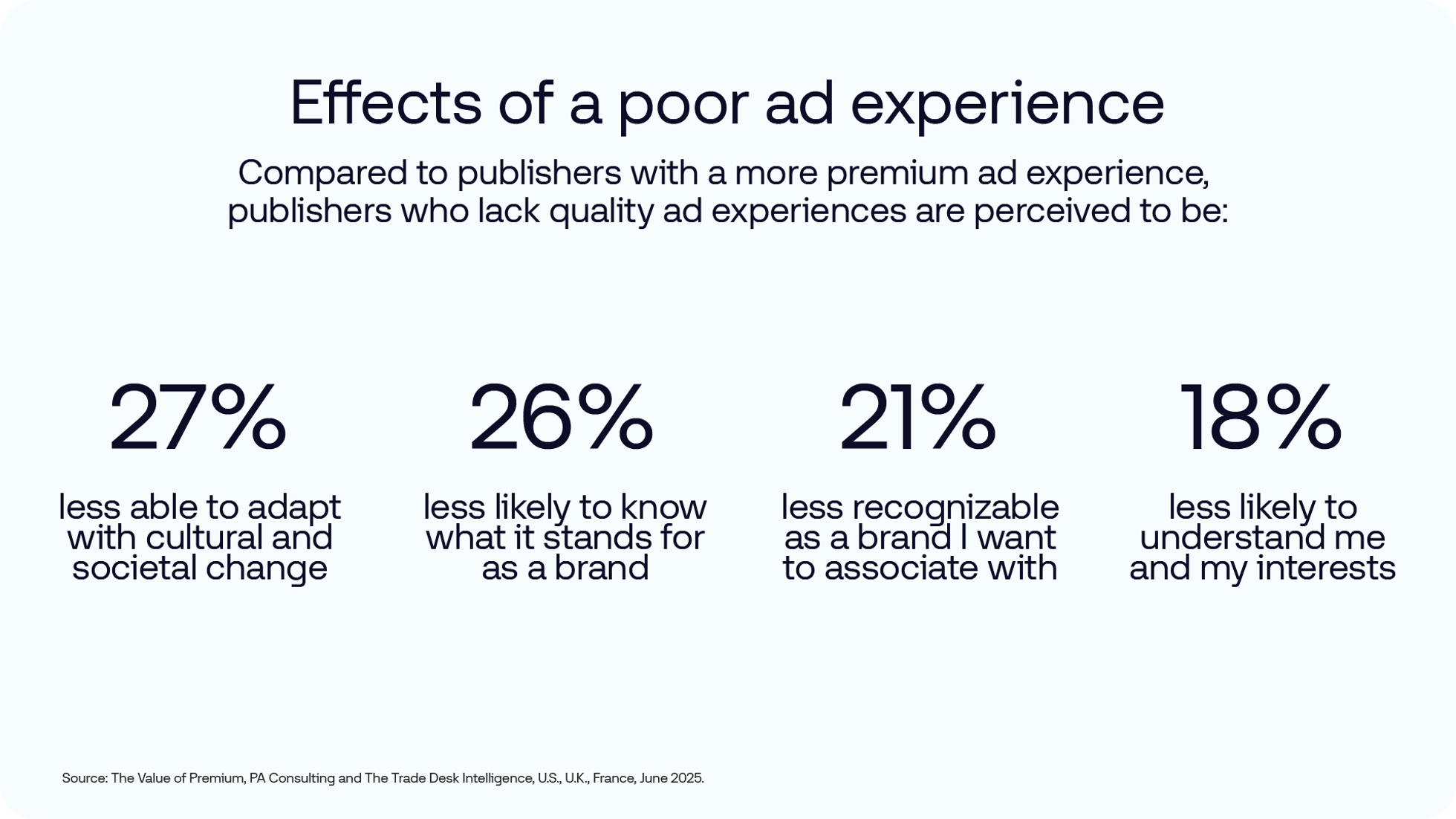
By developing the markers of a premium media brand, especially with regard to ad experience, publishers can avoid these pitfalls. Adhering to a criteria defined by the markers of premium helps publishers attract quality-minded advertisers and ultimately boosts brand credibility and monetization.
How publishers can become more premium
Our research reveals publishers can build more premium experiences by focusing on three core pillars: identity, consistency, and environment.
1. Build a clear brand identity
Define what your brand stands for and reflect it through every element of the user experience.
Example: The Economist pairs an uncluttered layout with serious editorial tone and minimal ad interference.
2. Deliver consistent quality
Audiences (and advertisers) notice when content quality or site performance is uneven.
Example: Spotify delivers personalized experiences across devices with high attention to UX and ad format alignment.
3. Create trustworthy, seamless environments
Reduce disruptive ad formats.
Increase contextual alignment between ads and content.
Prioritize site speed, readability, and accessibility.
Example: Disney+ offers intuitive navigation and seamless ad integration that creates an environment that feels worthy of users’ time.
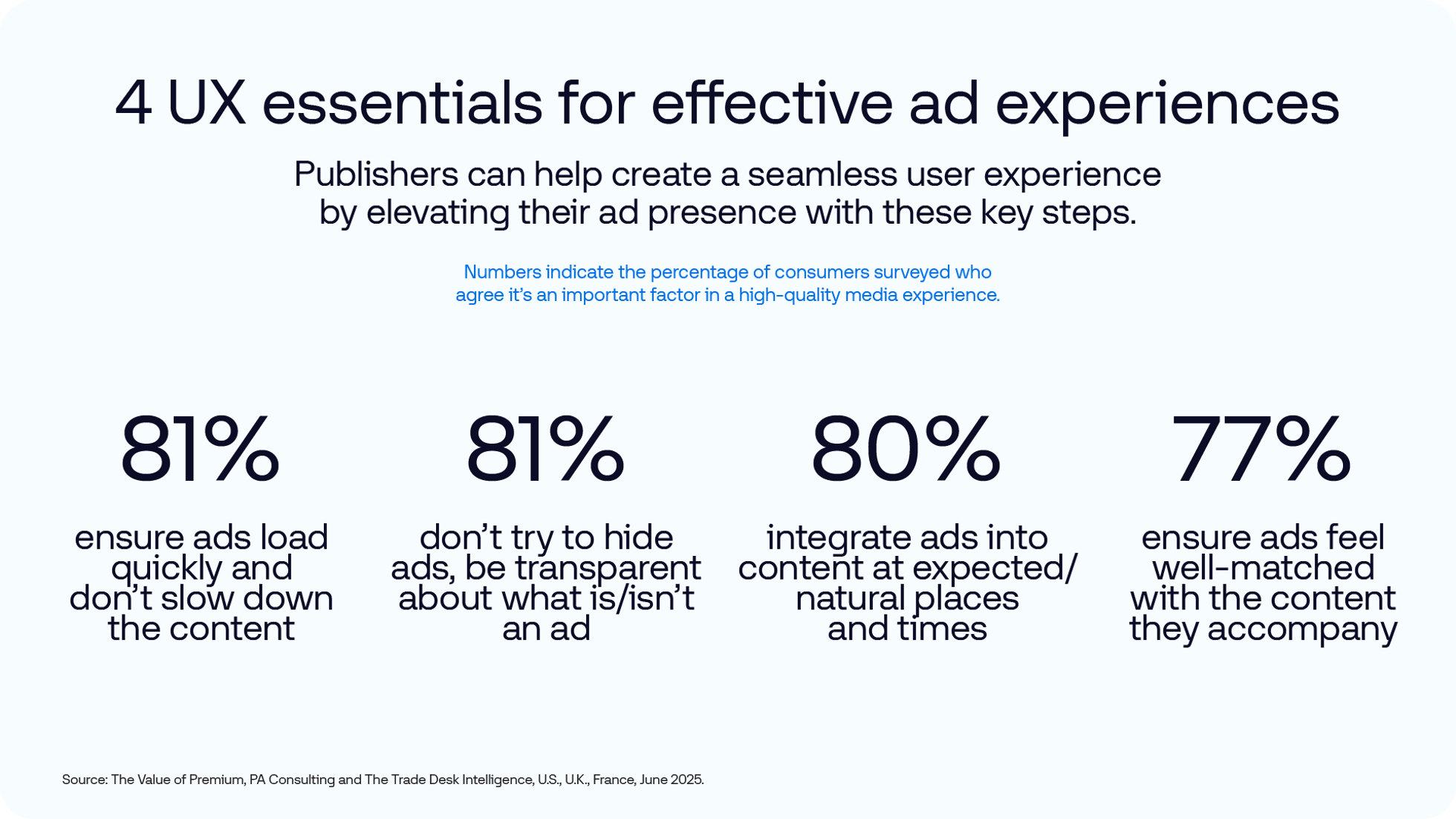
But how can publishers accomplish these three goals? Here are four levers to pull that will help you elevate your ad experience and make your properties more premium:
Premium pays off
Investing in premium experiences delivers measurable results for publishers, advertisers, and consumers alike. According to our research:
Publishers with premium experiences are 86% more likely to drive time spent on site
Premium environments are 85% more likely to increase trust in advertisers
67% of consumers say premium environments are simply more enjoyable
The findings are hard to ignore, and they indicate that premium is a performance driver. In a crowded digital ecosystem, it sets leading publishers apart.
For more insights on the benefits of premium media and a look at the in-depth methodology behind the research, download The Premium Payoff report.
Source:
The Value of Premium, PA Consulting and The Trade Desk Intelligence, U.S., U.K., France, June 2025.