Insights Artificial Intelligence
Instant Intelligence: 95% of consumers verify AI-generated search results

Recruiting fraud is a growing issue for many companies.
The Trade Desk takes this issue seriously and is taking steps to address it.
Retail Media
Halloween demand may peak in October, but many consumers start planning as early as August. For advertisers, that creates a longer window to influence seasonal shopping decisions.

Share:
Nearly half of Halloween shoppers (49%) begin planning before October.1 That early intent shows up across the open internet, where consumers look for inspiration, gather ideas, build lists, and make seasonal decisions. For brands across categories — from quick service restaurants (QSR) to travel — the planning curve creates opportunities to connect with shoppers well before Halloween arrives.
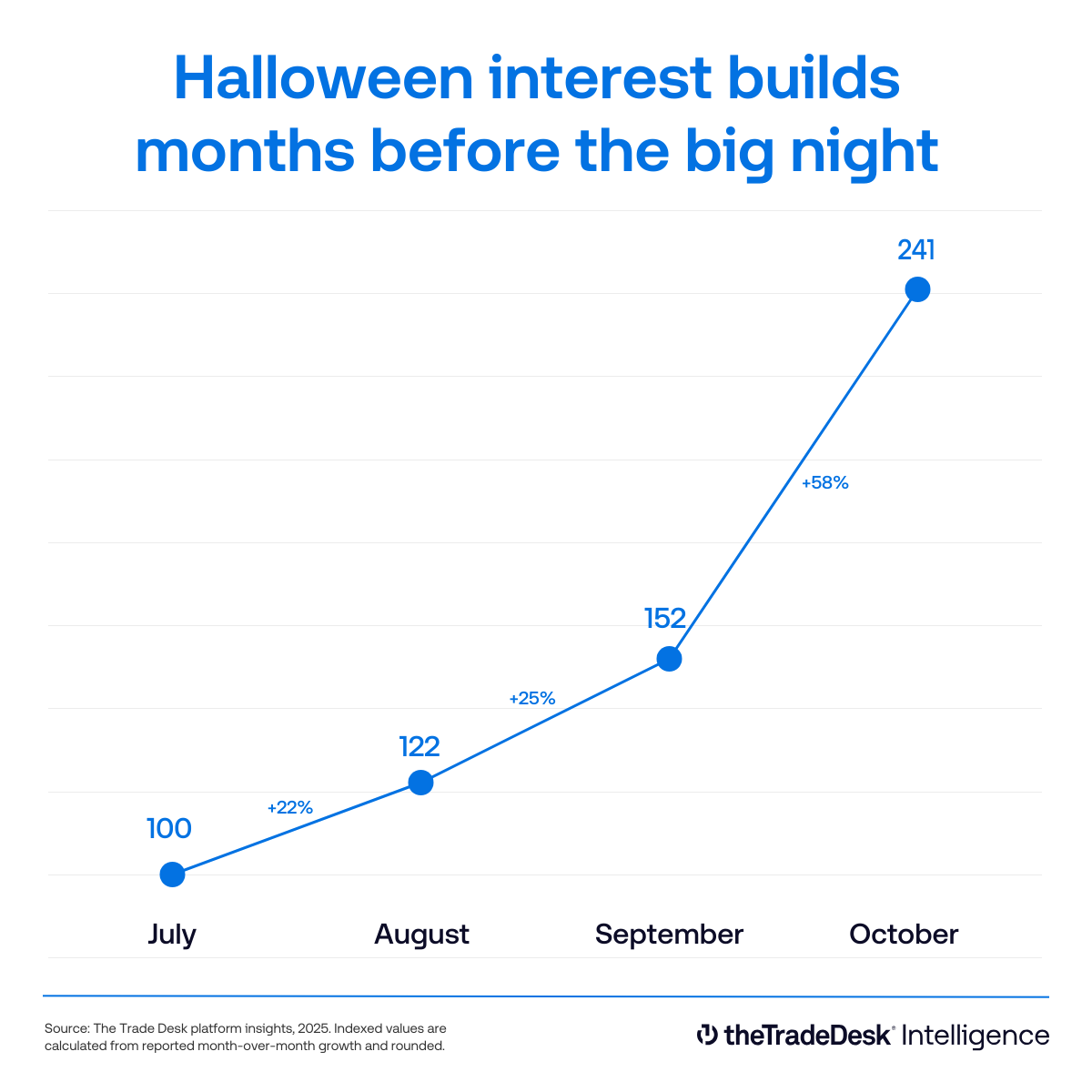
The Trade Desk platform insights show that Halloween content consumption starts rising well before the holiday:
Consumption rose 22% from July to August and another 25% into September before surging 58% in October.
A weekly view shows the same pattern: Consumption nearly doubled from late July to late September, then accelerated another 70% through late October; and the same early momentum appears across EMEA and APAC.2
Brands across retail, grocery, entertainment, restaurants, travel, and local services have an opportunity to engage consumers before demand peaks as consumers turn to the open internet to research costume ideas, decor inspiration, party planning, spooky recipes, and Halloween events.3
For example, quick-service restaurants (QSRs) see seasonal momentum around Halloween. Across omnichannel software firm S4D’s QSR partner network, October orders increased 50% year over year, driven largely by Halloween limited-time offers.4
Candy continues to be central to the holiday. In 2025, confectionary spending reached a record:
Sales netted $7.4 billion, representing 18% of annual sales in the category.
94% of Americans share Halloween candy with friends and family.
84% of trick-or-treat households hand it out.5
Instead of waiting for late October, marketers are best positioned to begin Halloween campaigns in the weeks and months leading up to the holiday when consumers are actively planning.
That early planning window gives you a chance to reach shoppers before decisions are made, which can matter immensely for costume selection, party planning, grocery lists, entertainment choices, restaurant orders, and seasonal purchases.
An omnichannel strategy can help you remain present throughout that journey as audiences move from brainstorming to consideration to action across the open internet, including CTV, digital audio, online video, display, and other channels where seasonal content consumption is building.
For advertisers hoping to reach engaged Halloween shoppers, spooky season might start as early as August. By activating across channels early, you can reach consumers while they are still gathering ideas, building lists, and deciding what to buy, book, make, wear, and attend.
Sources:
1. National Retail Federation, Halloween trends: What’s driving record spending, 2025.
2. The Trade Desk platform insights, 2025.
3. Datacy.com, 10,000 Halloween-related consumer interactions, July – October 2025.
4. S4D, Halloween QSR Marketing Report, 2025.
5. National Confectioners Association, Confectionery Sales Report, 2026.
Insights Artificial Intelligence
Insights Retail Media
Insights Omnichannel