Insights Data and measurement
How retail data is helping to deliver outsized returns across markets

Recruiting fraud is a growing issue for many companies.
The Trade Desk takes this issue seriously and is taking steps to address it.
Artificial Intelligence
As AI search adoption accelerates, new research from The Trade Desk Intelligence and PA Consulting shows that consumers still rely on the open internet to validate information and make purchase decisions.

Share:
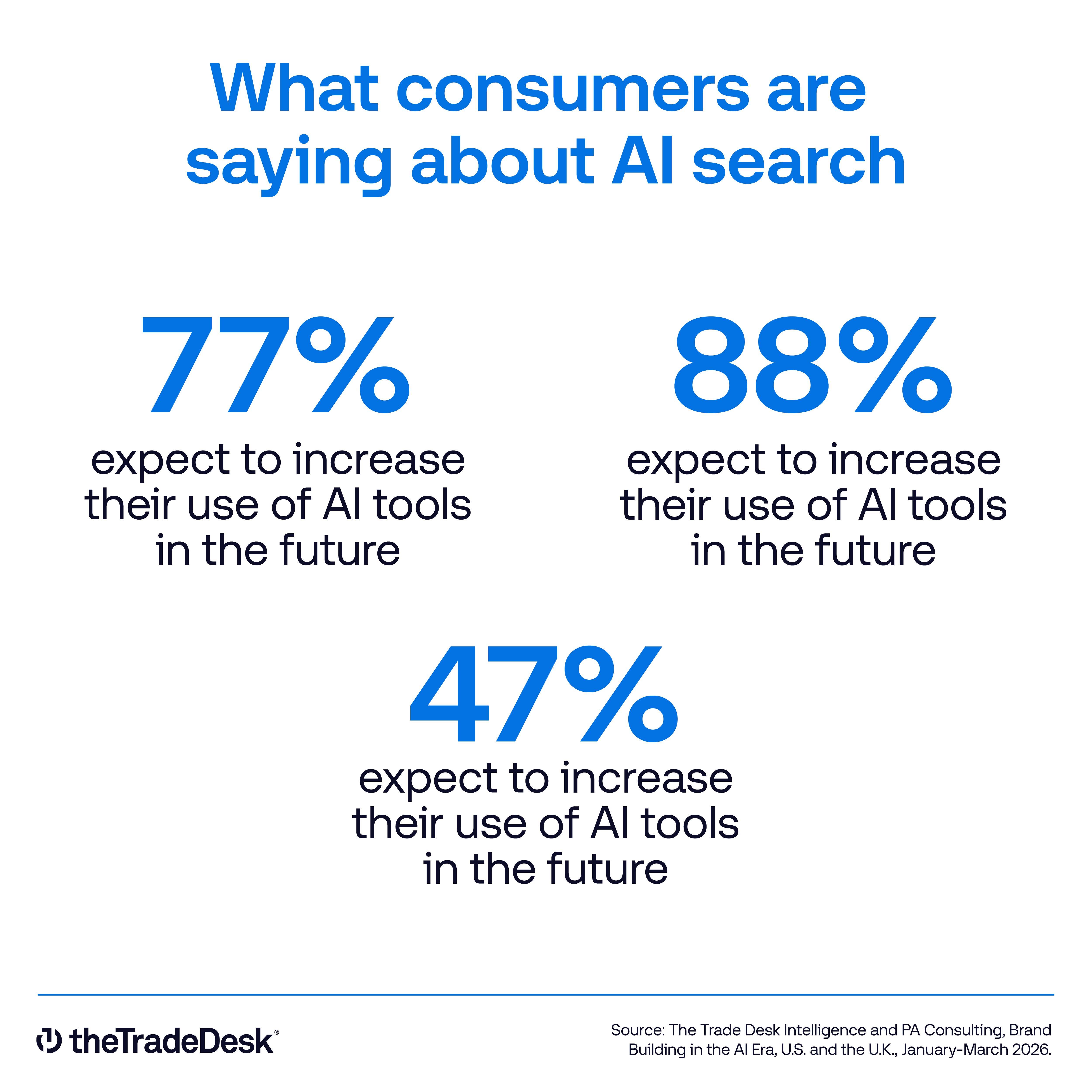
AI search engines are quickly becoming part of everyday search behavior. New research from The Trade Desk Intelligence and PA Consulting shows that 77% of consumers say they expect to increase their use of AI search tools in the future.1 Even as this behavior grows, many people continue to approach AI-generated information with caution.
Our findings suggest that AI search increasingly helps consumers get oriented, summarize information, and narrow their options. But when those decisions carry financial or personal weight, consumers continue to seek validation from trusted sources on the open internet.
The research also highlights that consumers move between AI answer engines, publisher sites, review platforms, retailer websites, and other trusted sources throughout the purchase journey. Rather than replacing the open internet, AI is creating a new dynamic where discovery happens faster and evaluation and eventually decisions become more deliberate.
What we found:
Despite growing interest in AI search, AI environments still account for only about 5% of the average digital media day, with the vast majority of consumer attention remaining elsewhere.1 For those who adopt AI tools, a new behavior pattern is emerging: Consumers use AI answer engines to get oriented before turning to trusted websites, publishers, retailers, and reviews to validate information and build confidence.
This behavior is especially pronounced when the stakes of the decisions at hand are perceived to be greater. Nearly all consumers (95%) say they double-check AI-generated search results using other sources, and 88% are not comfortable relying solely on AI for major decisions.1
Travel planning illustrates the dynamic well. A family may begin with an AI-generated itinerary before reviewing travel sites, publishers, and platforms to evaluate destinations, compare options, and make a final purchase. AI helps them narrow the field, while the open internet is where they build confidence and make decisions.
What it means:
For marketers, AI and the open internet are increasingly complementary. AI tools are helping consumers discover information faster and narrow their options earlier in the journey. But discovery and decision-making are proving to be very different behaviors. As consumers move from curiosity to commitment, they continue to rely on trusted publishers, brands, retailers, reviews, and premium content environments to validate information and build confidence.
Report
Download our report to learn about the brand-building advantage marketers can earn in a world of AI-driven discovery.
As AI compresses the top of the funnel, the environments where consumers evaluate options and make final decisions are more valuable than ever. For advertisers, that raises the importance of building familiarity and trust before consumers enter the market — and maintaining a strong presence across the open internet where decisions are ultimately made.
Source:
1. The Trade Desk Intelligence and PA Consulting, Brand Building in the AI Age, January – March 2026.
Insights Data and measurement
Insights Omnichannel

Insights Omnichannel