Resources Connected TV
Pause ads are here, signaling the next evolution of CTV

Recruiting fraud is a growing issue for many companies.
The Trade Desk takes this issue seriously and is taking steps to address it.
Omnichannel
The 2026 U.S. election cycle is projected to generate a record $11.6 billion in political advertising spend.1 For nonpolitical advertisers, the opportunity is to identify where political demand will concentrate and build enough flexibility into media plans to preserve reach as competition for inventory increases.
Share:
Political spending is already outpacing prior election cycles, with most campaign advertising still predicted to arrive between August and November.1 As demand increases, available inventory in some markets may become a more significant constraint for advertisers than media budgets alone.
For commercial advertisers, the months ahead are an opportunity to plan for capacity, reach, and channel flexibility before demand peaks.
A recent Supreme Court ruling (NRSC v. FEC) removed limits on how much political parties can spend in coordination with candidates.2
Changes to political party spending may give political committees access to lower unit rates on cable and broadcast TV, allowing their budgets to be stretched further across the market. This could increase competition for linear inventory and make available capacity — rather than campaign budgets — an increasingly important constraint as Election Day approaches.
Broadcast TV is predicted to attract nearly half of all political advertising spend in 2026, with demand concentrating in select markets later in the cycle.1
The practical implication for this is that some advertisers may find the inventory they typically rely on harder to secure when it matters most. This is especially relevant for brands that depend on local linear TV during important fall selling periods.
Potentially exposed categories include:
Retail, where back-to-school and early holiday campaigns often align with the period when political spending reaches its highest levels
Automotive, particularly local dealers and regional campaigns with heavy linear TV investment
Healthcare and insurance, where fall enrollment periods frequently depend on local television reach
By planning early, advertisers are able to identify where inventory constraints are more likely to emerge and secure alternative paths to reach before competition intensifies.
CTV is becoming a larger part of the political media mix, with spend estimated to top $2.7 billion this cycle, or 23% of overall political advertising.1
For commercial advertisers, premium CTV can provide an additional layer of scalable reach if local linear environments become constrained. Premium media can help traders reach audiences across screens while helping to maintain greater control over frequency and media allocation.
The broader open internet creates additional options; for example, audio, digital out-of-home, and display can complement premium video as marketers adapt their plans around changing availability. This does not require abandoning linear television. Instead, advertisers should build an omnichannel plan with enough optionality to extend reach when individual markets tighten.
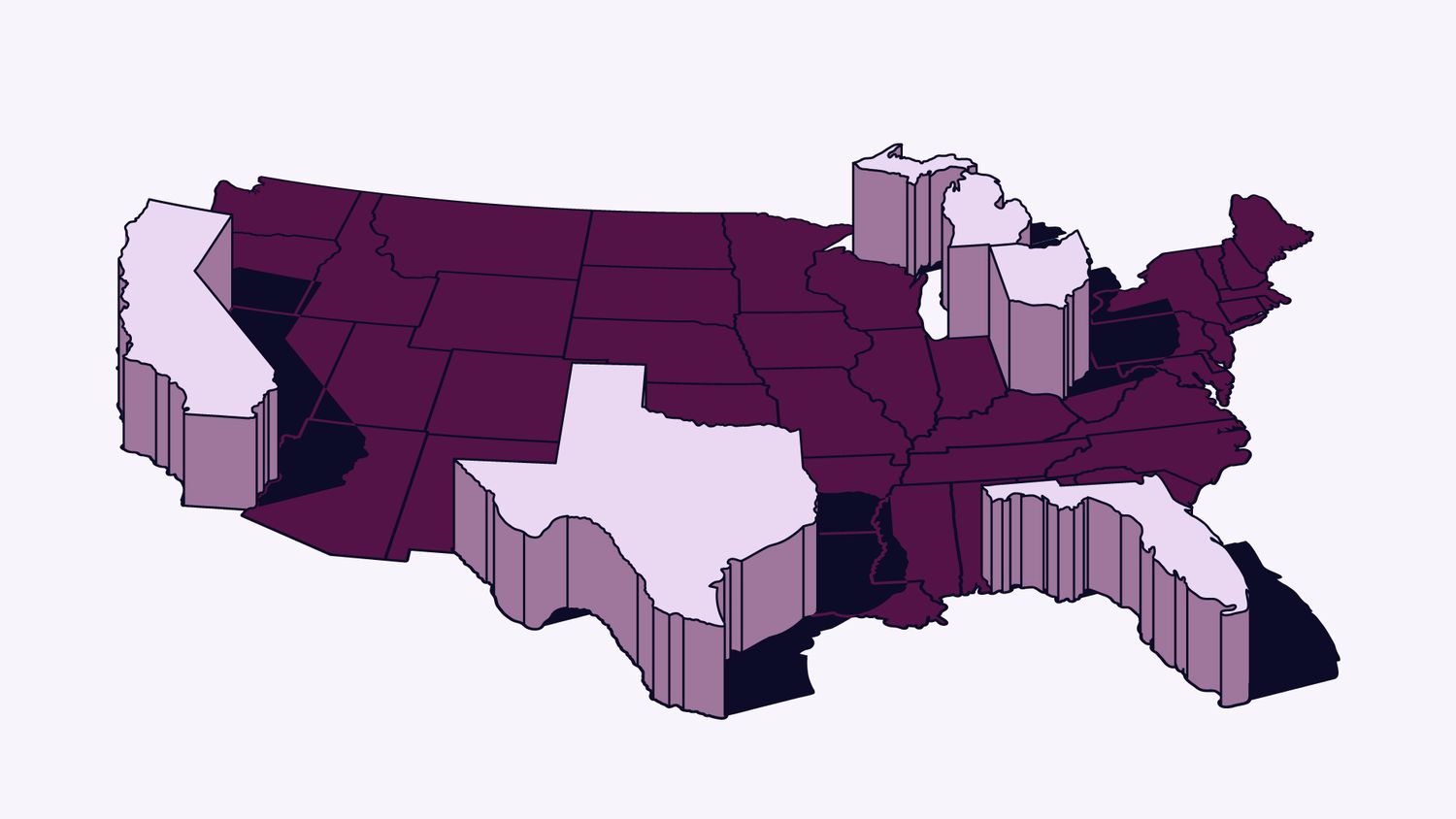
Political demand will not affect every market equally. California alone is projected to attract nearly $1 billion in political advertising, while forecasts in other states continue to shift as races evolve.1
Ohio’s projection, for example, increased by more than $309 million, while Florida’s declined by roughly $200 million.1 As spending forecasts shift throughout the cycle, advertisers may benefit more from market-specific planning than a single nationwide approach.
While planning, advertisers should ask:
Which priority markets overlap with the highest projected political spend?
Where could timing or channel mix create more flexibility?
Which campaigns rely most heavily on inventory that may become constrained?
How will measurement account for election-related market effects alongside normal fall seasonality?
Answering these questions early can help traders preserve reach and make better use of available inventory as conditions on the ground change.
Because election-related demand will impact markets unevenly, flexibility will be a competitive advantage. Advertisers that understand where inventory constraints are most likely to emerge and those that diversify their access to reach across channels will be better positioned to maintain performance as spending increases.
CTV and the broader open internet can provide that flexibility by extending reach beyond constrained linear environments, giving traders additional control over how campaigns adapt. With political spending expected to accelerate through Election Day, considering those options now can help advertisers make the most of an unusually dynamic media marketplace.
Planning campaigns through the 2026 election season? Contact your representative with The Trade Desk to explore how an omnichannel strategy can help preserve reach and flexibility as political demand increases.
This information is provided solely for background and is not a representation or guarantee of any future performance.
Sources:
1. AdImpact, Updated Political Projection Report 2025 – 2026, published 2026.
2. Supreme Court finds limits on coordinated party expenditures unconstitutional in NRSC v. FEC (609 U.S. ____(2026)).
Resources Connected TV
Resources Our platform

Insights Omnichannel