Lee Singletary
Editorial Director, The Trade Desk
Recruiting fraud is a growing issue for many companies.
The Trade Desk takes this issue seriously and is taking steps to address it.
Connected TV
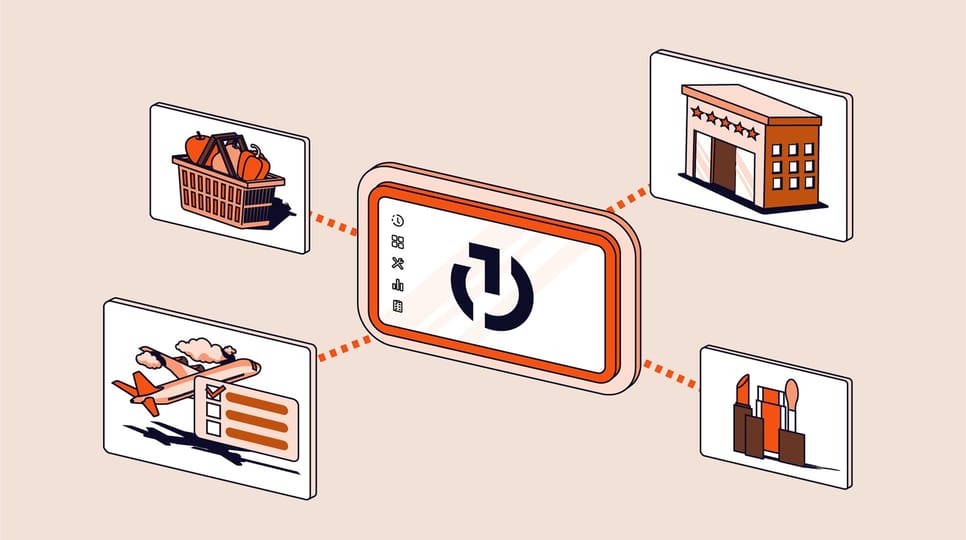
By activating retail audiences across premium streaming TV, Unilever and its agency partner, WPP Unite, proved that retail data can do far more than close the sale — it can shape a full-funnel media strategy.
Share:
Lee Singletary
Editorial Director, The Trade Desk
The convergence of retail data with premium connected TV (CTV) inventory is redefining what retail media can do, transforming it into a full-funnel growth engine.
No partnership better illustrates this shift than the one between Unilever and its agency, WPP Unite. Together, they designed a campaign for Degree Deodorant’s “Whole Body” using Walmart Connect’s first-party data to reach the right audiences at scale in premium streaming environments. The results were striking. But more revealing than the numbers was the philosophy behind the work.
Ryu Yokoi, chief media and marketing capabilities officer at Unilever North America, describes retail media data as more of “an input than an output.” He adds: “For a very long time, retail media was the output of all the work — but there’s so much intelligence within the data, whether it’s reflective or predictive. It gives us an opportunity to be really performing.”
The real breakthrough at the center of this collaboration is retail data being framed as the input that shapes upstream media decisions.
Case Study
When Walmart announced its acquisition of Vizio, Unilever moved quickly. Yokoi recalls his team calling almost immediately after the announcement was made public. The Degree Whole Body Deodorant campaign became the vehicle for activating Walmart’s CTV canvas in a meaningful way for the first time.
The campaign’s creative concept was well-suited to the format: playful, culturally resonant, and built around a genuine product innovation. As Yokoi put it, “We always were limited by the fact that people weren’t going to grow another underarm — but the answers were around us the whole time. That’s what this campaign is about.”
Activating through The Trade Desk’s platform, shopper data was used to identify high-propensity buyers and reach them within premium streaming environments on Vizio smart TVs. The approach delivered across every dimension measured.
The campaign delivered strong business results and improved media efficiency, supporting the idea that retail-powered CTV can do real work across the funnel. According to Diana Finster, group director and head of Partnerships Plus at Walmart Connect, iSpot results from the campaign showed that 47% of OTT/CTV total reach was incremental to linear TV.
On the brand side, Unilever reported that Walmart product sales doubled immediately after the campaign compared to the trial period. The campaign achieved efficient reach and significantly drove lifts in product detail page (PDP) views, a “fast signal” the team could monitor in near real time and use to optimize in-flight.
For Dominick Pace, president of media at WPP Unite, the performance validated a principle he holds closely. The task for any brand, he explains, is not to get consumed by the breadth of available data, but to identify which signals are most predictive of the outcome you care about — and pursue them with discipline.
“It is easy to get drunk on data. It’s critical for brands to know which signals — let’s call them ‘fast signals’ — are most likely to deliver an outcome, and then just stick to it. Religiously.”
Perhaps the most strategically significant aspect of this collaboration is what it unlocks for measurement. Because Unilever’s business runs primarily through retail, having a signal that traces media exposure all the way to purchase at Walmart is genuinely transformational.
Yokoi describes it plainly: “The core of our business is moving through retail like Walmart. It is rare for us to have that kind of intimacy all the way through to the till.” Being able to connect streaming impressions to in-store and online purchase data closes a loop that most CPG marketers have historically had to leave open.
As Finster puts it: “We can close the loop. We can actually say: Is this working? Are you delivering real results? Are we reaching the right people who are actually shoppers — and is this impacting everything, not just one silo?”
All three partners are quick to say this is just the beginning. Pace sees live sports as the next major frontier — a high-attention, high-reach environment where retail audiences combined with premium supply would amplify both awareness and conversion. Finster points to the potential of Vizio’s first-party logged-in audiences as an even richer targeting layer still being unlocked.
Yokoi’s future vision stems from a conversation at a meeting where he recalled a moment that reframed his entire sense of what the Vizio opportunity means: “A year ago, someone said: Every single Vizio television is a Walmart store. The efficiency of ‘add to cart’ from screen today can go even further, more seamless. That’s a future that is really exciting.”
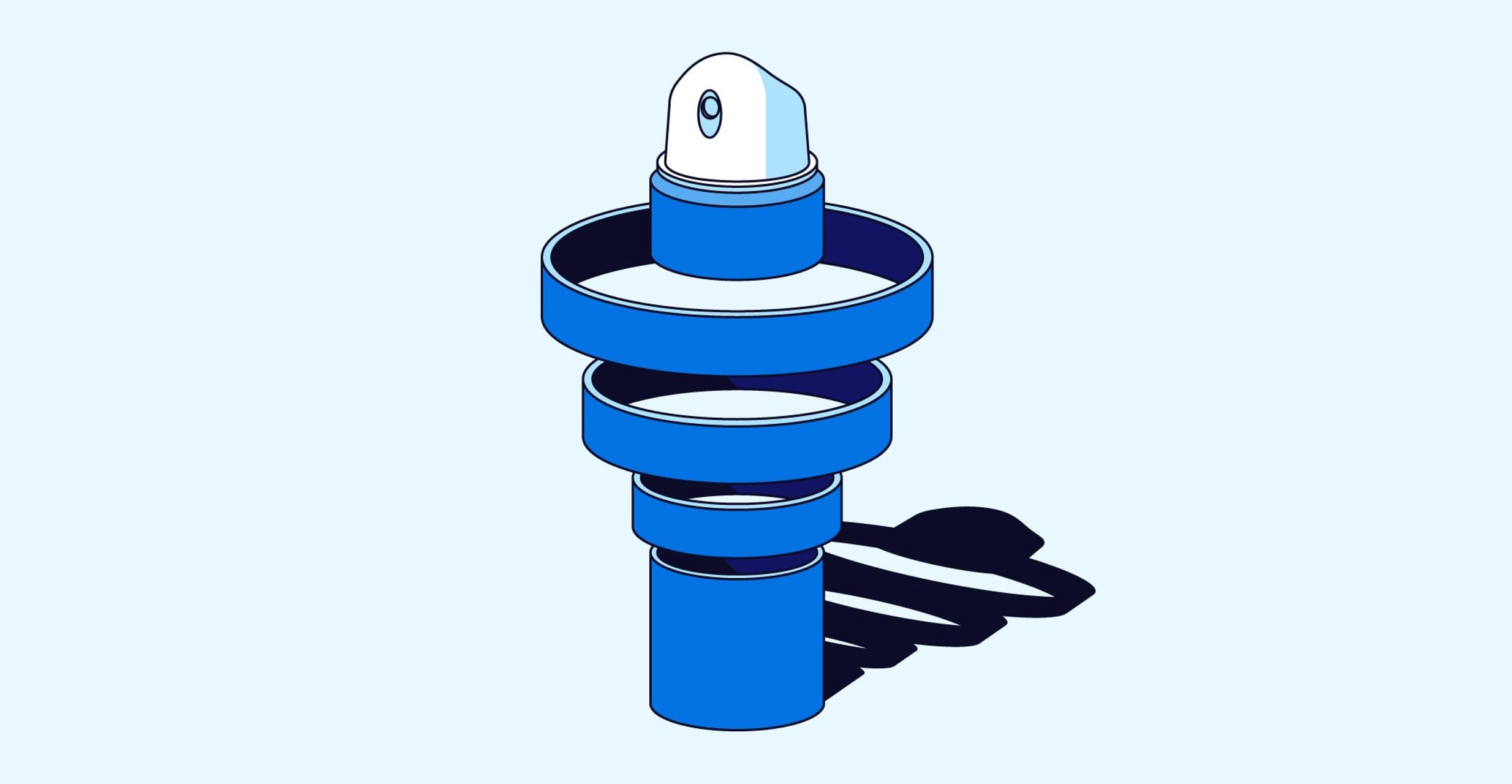
What Unilever, WPP, and Walmart Connect have built together isn’t just a campaign success story. It’s a template for how CPG brands can activate retail intelligence at the top of the funnel — using the data where consumers actually buy to decide where, and how, to reach them. The living room has the potential to be an extension of the store. And the brands that treat it that way will have a distinct advantage.
Ryu Yokoi, Diana Finster, and Dominick Pace’s perspectives stem from a panel, titled “Winning the Attention Economy with CTV and Retail Media,” at the POSSIBLE conference on April 28, 2026.
Case Studies Retail Media

Resources Retail Media
Resources Retail Media