Resources Our platform
How to own your future on the premium open internet

Recruiting fraud is a growing issue for many companies.
The Trade Desk takes this issue seriously and is taking steps to address it.
Identity
The identity landscape is constantly evolving. Privacy regulations, signal loss across platforms, and shifts in consumer expectations are driving marketers to rethink how identity resolution works. Success today means moving from a cross-device tracking mindset to one focused on durable, privacy-conscious identifiers.

Share:
Editor’s note: This article was originally published on March 6, 2024, and was updated on September 10, 2026, to reflect changes in the industry, including developments related to third-party cookie deprecation.
For years, digital advertising leaned on abundant legacy signals (think third-party cookies and device IDs) to power targeting, personalization, and attribution.
But with growing signal loss across platforms and changes in privacy regulations worldwide, marketers face a new challenge: delivering on advertising performance while respecting user control.
Identity resolution is the association of pseudonymized digital identifiers at the household and individual level for advertising use cases such as cross-device targeting, post-campaign measurement, and attribution.
Put simply, it allows marketers to link the many identifiers that represent a person or household online, enabling them to understand reach, frequency, and performance without relying on cookies or device-based tracking.
Identity graphs, like the ones used by our Identity Alliance, are built in three steps. They are composed of deterministic identifiers clustered at the household and individual level.
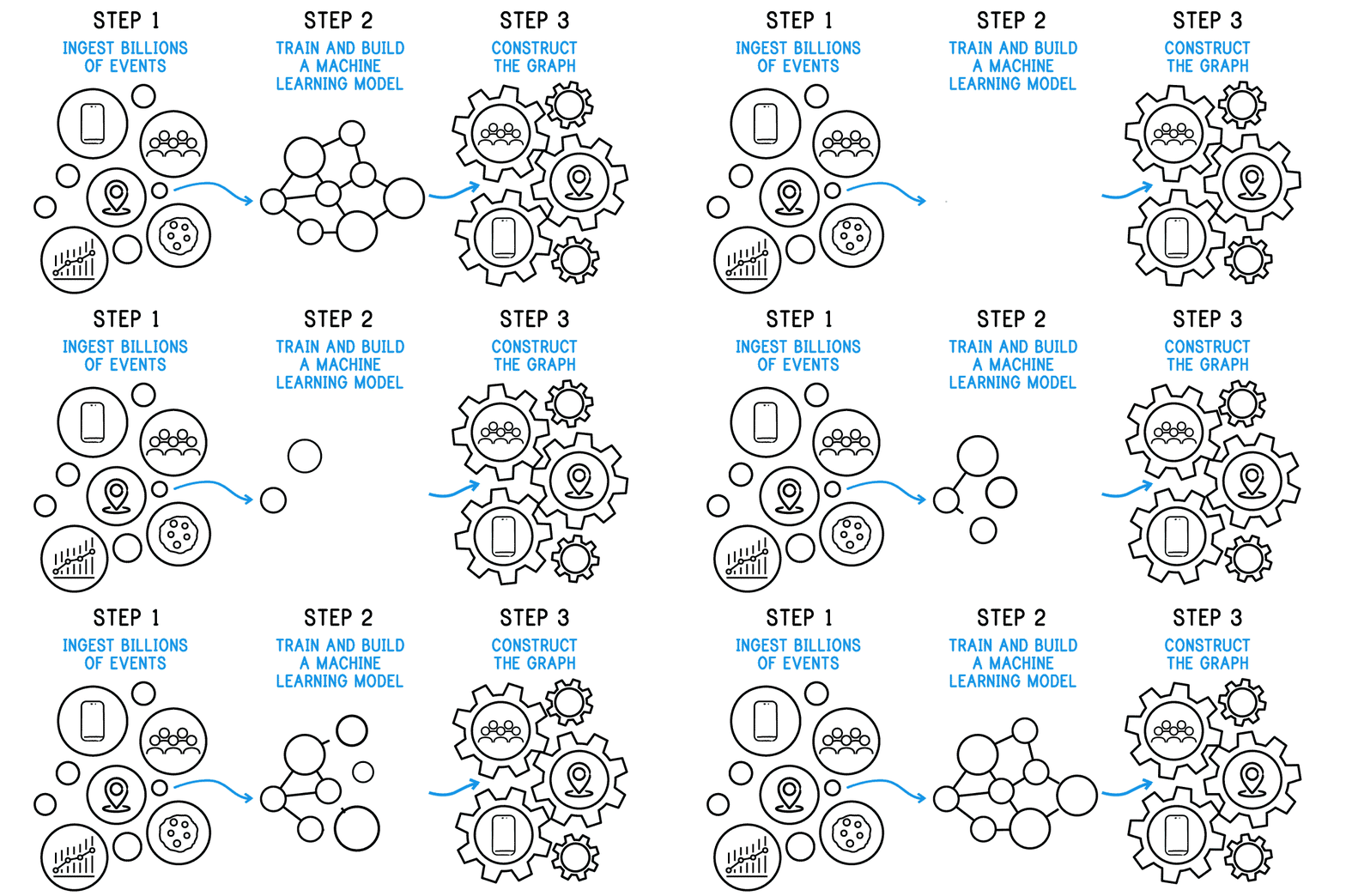
The foundation is a sophisticated machine learning model that leverages the best data available to help deliver scale and greater precision for targeting audiences across devices and channels.
ID types include:
Cookies
Mobile ad IDs (MAIDs)
CTV IDs
Hashed emails (not graphed in Identity Alliance)
Identifiers are grouped by deterministic and probabilistic associations.
At the household level: Connected TV (CTV) and streaming device IDs are associated with specific apps used by multiple people — often simultaneously.

At the individual level: Cookies, MAIDs, and other alternative IDs (like LiveRamp’s RampID and The Trade Desk’s UID2) are more closely tied to single users.
This separation between household and individual identifiers allows advertisers to measure shared and personal engagement more accurately, improving frequency management and cross-channel understanding in a privacy-conscious manner.
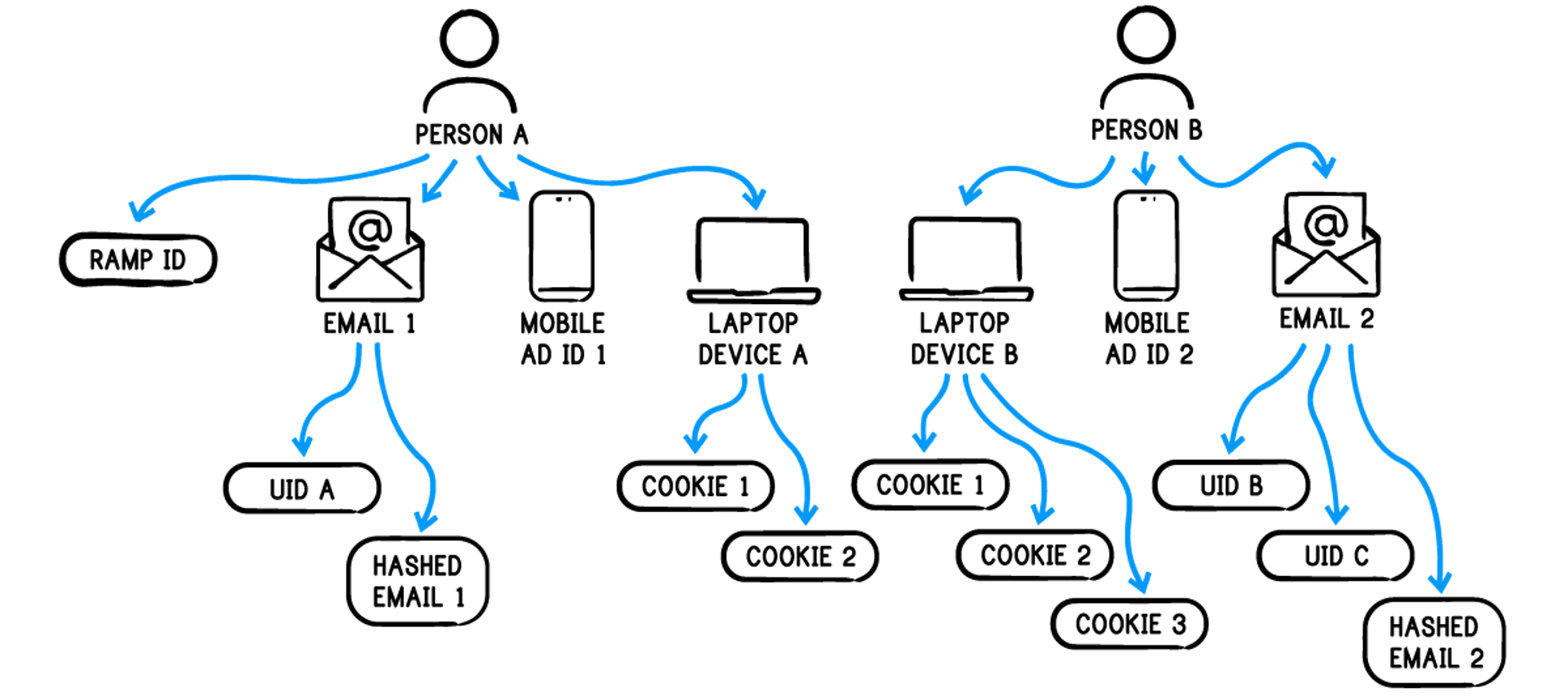
As traditional device-based identifiers become less reliable and privacy regulations continue to change, marketers are shifting from a cross-device mindset to one centered on cross-identifier targeting.
Email, for example, is a common access point for content consumption on the open web and streaming services alike, serving as a cross-device identifier. UID2, an open-access identifier based on emails or phone numbers, is also a strong foundation for cross-identifier targeting and measurement.
The move toward cross-identifier resolution represents a shift from tracking devices to understanding durable, privacy-conscious connections between people, households, and environments, giving advertisers a more clear and consistent view of audience behavior across channels.
Identity resolution increasingly relies on durable identifiers that offer a stable, privacy-conscious framework for activation.
Identity Alliance is a coalition of the industry’s leading identity graph solutions that unifies people, households, and devices — along with trusted alternative identifiers such as UID2 and RampID — into a single, interoperable graph integrated directly into our platform.
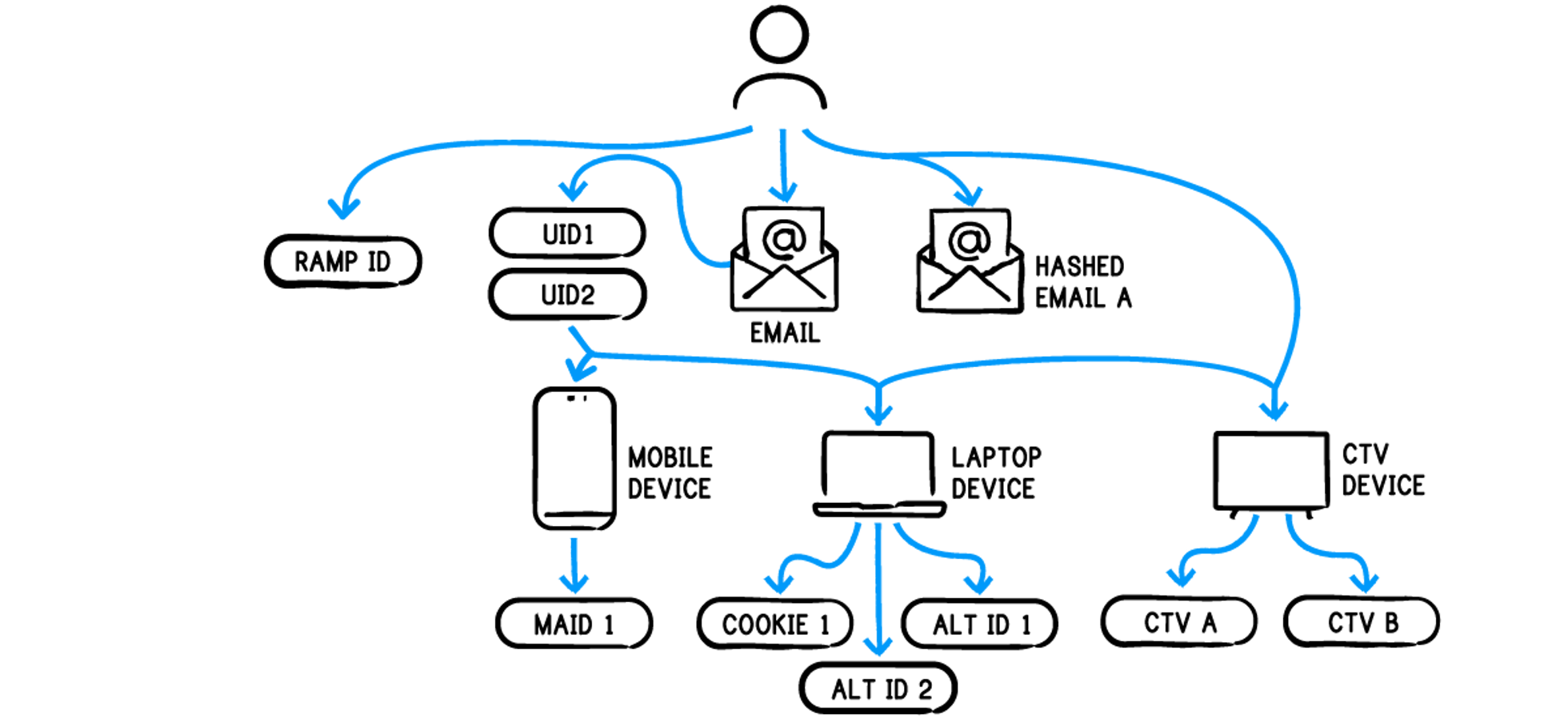
This holistic identity layer gives advertisers a more consistent way to plan, activate, and measure campaigns across the open internet (including engaged platforms like CTV and lower-funnel channels like mobile web), all in a privacy-conscious manner.
To get started with Identity Alliance, reach out to your designated account manager at The Trade Desk.
Resources Our platform
Case Studies Our platform

Insights Omnichannel